Like any respectable sport, soccer is a demanding sport that requires various physical and mental abilities. Whether we are talking about amateur or professional soccer, the warm-up represents a crucial step before any training session.
Beyond the physical aspect, the warm-up is the foundation. In this article, we will explore the importance of warming up in soccer. We will provide our best practical advice for its preparation, examine the different types of warm-ups, and finally, give you concrete examples to apply in your sessions to illustrate this essential phase of soccer.
- Why warm up in soccer?
- How to prepare a warm-up before your session?
- What are the different types of warm-ups?
- Examples of warm-up exercises
- The warm-up, a crucial step in soccer
1. Why warm up in soccer?
This question may seem trivial... but if we decide to talk about it, it's not for nothing. Too many players neglect this warm-up phase before a training session. It is not uncommon to see them, barely arriving on the field, shooting with all their might at the goal. This is not reasonable.
On the contrary, the warm-up should not be seen as a mere formality. It represents an essential step to prepare the body and mind for the physical effort that will occur in the next two hours.
Several reasons justify that this practice of warming up is systematic.
The physical aspect
First, a good warm-up increases body temperature, improves blood circulation, and better supplies muscles with energy and oxygen. In summary, from a physical point of view, the warm-up awakens the body. It prepares the joints, tendons, and ligaments, which are often the cause of injuries. Consequently, the warm-up reduces the risk of injury, a central concern for any coach.
The mental aspect
The mental aspect is the second benefit of a successful warm-up. It prepares players for the effort to come. It promotes concentration, stimulates motor skills, and overall, improves players' responsiveness on the field.
Progress with our drills
Access 500+ premium drills with diagrams inspired by pro coaches. New drills every week.

2. How to prepare a warm-up before your session?
The preparation phase of a warm-up should not be taken lightly. It requires a thoughtful approach adapted to the objectives of your training session of the day. Here are some tips we give you to maximize the benefits of this preliminary step to training.
Muscle and cardiac awakening
First, it is important to start with light cardiovascular activity. For example, you can set up a low-intensity run, the famous "3 laps around the field."
This first phase gradually increases the heart rate and prepares the cardiorespiratory system for the effort that follows.
Dynamic stretching
Next, after this muscle and cardiac awakening, you can start incorporating dynamic stretching exercises to increase muscle flexibility. These exercises should be specific to soccer, working particularly on the quadriceps, hamstrings, or adductors, which are heavily used during soccer and are often the source of injuries among soccer players.
Joint mobilization
Finally, you can also propose exercises to loosen the joints and improve their range of motion. For a complete preparation, prioritize circular movements and targeted rotations.
Plan a precise timing for each exercise you propose so that they follow each other and the players remain 100% engaged and warm.
3. What are the different types of warm-ups?
Soccer offers various warm-up approaches depending on your goals for the day. We will present 3 types of warm-ups that you can implement and that are perfectly complementary:
- Warm-up without the ball
- Warm-up with the ball
- Warm-up before a speed/agility exercise.
Progress with our drills
Access 500+ premium drills with diagrams inspired by pro coaches. New drills every week.
Warm-up without the ball
The warm-up without the ball aims to focus on physical movements alone, like the exercises presented earlier.
It can include light sprints, jumps, changes of direction, or body strength exercises. Its goal is to prepare the muscles and the effort to come.
Warm-up with the ball
It usually follows the phase without the ball. Its purpose is for players to regain their bearings with the ball. They still engage their bodies but also increase their technical focus. This can include juggling, short passes, or ball control exercises. A gradual increase in intensity should occur throughout these warm-ups.
Warm-up before a speed/agility exercise
The warm-up before a speed/agility exercise, generally short, focuses on specific exercises aimed at improving players' reactivity and speed. Short but dynamic sprints, changes of direction after a signal, or coordination exercises prepare for speed or agility.
4. Examples of warm-up exercises
To concretize our previous advice, here are some examples of warm-ups that you can decide to implement before your sessions, as well as advice on pre-match warm-ups.
Of course, these exercises must be adapted to your team, the level of your players, and the training session you have planned.
Examples of warm-ups without the ball
Here are some exercises aimed at warming up the body and heart rate before touching the ball:
- Perform light runs over 15 to 20 meters
- A few laps around the field at a light pace (low heart rate) for about ten minutes
- Upper body warm-up: arm/shoulder rotation in one direction then the other
- Knee lifts
- Heel flicks
- Leg swings forward then backward
- Side shuffles alternating right/left
- Reaching for the grass to the right then to the left is a good mix between upper and lower body warm-up.
We remind you that it is important not to push yourself too hard at the start of the warm-up; the idea is to gradually increase intensity while maintaining ease of breathing.
Warm-up exercises with the ball
There are a multitude of warm-up exercises with the ball, here are two examples from our library of several hundred exercises.
Combinations with a one-touch circuit and supporting player
This exercise, used several times by Jürgen Klopp during training sessions at Liverpool, effectively gets your players' bodies going. It requires communication, gathering information before movements and passes.
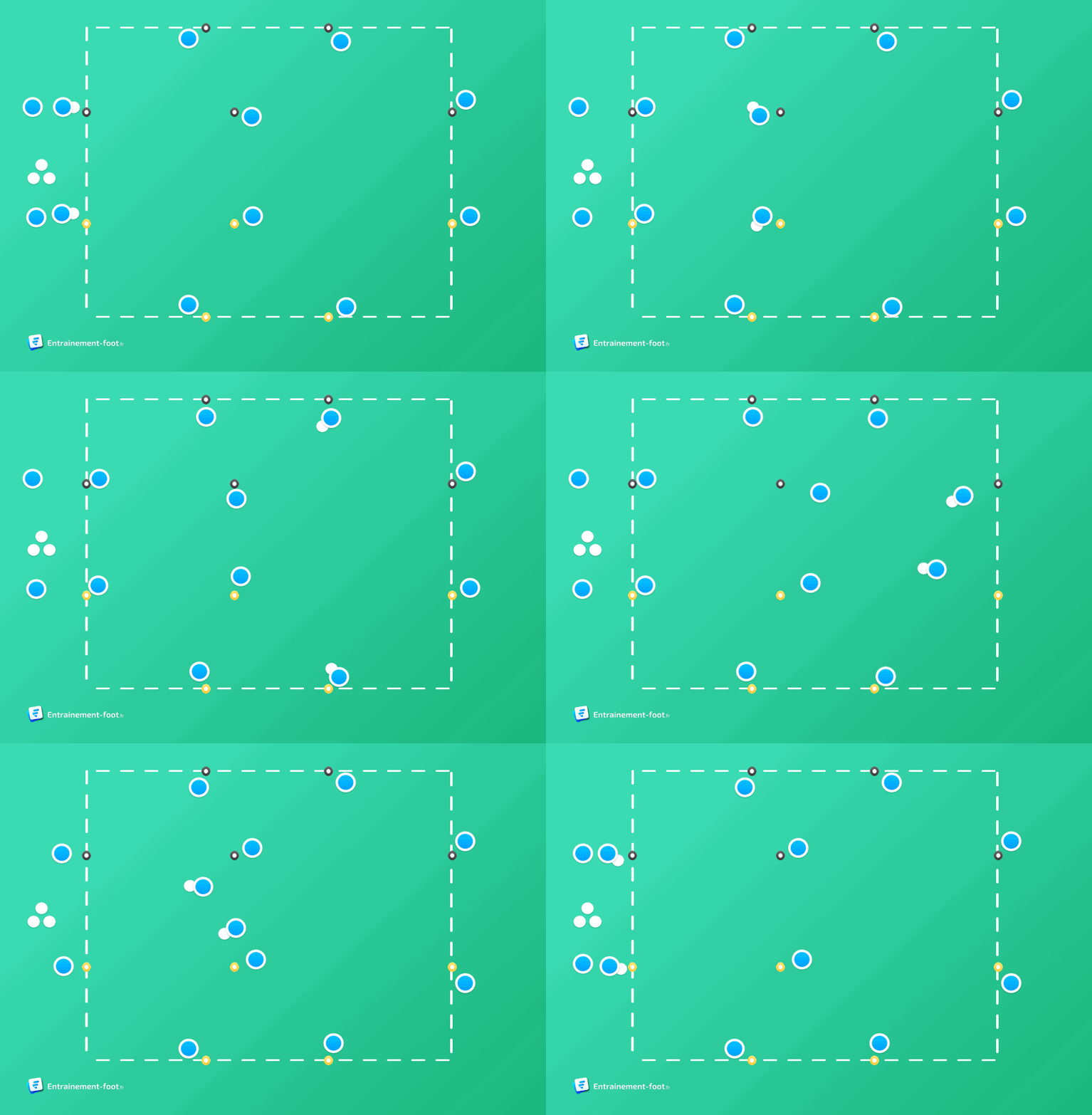
Combinations with a one-touch circuit and supporting player
After about ten minutes of exercise, you can implement a variation with the introduction of direct play.
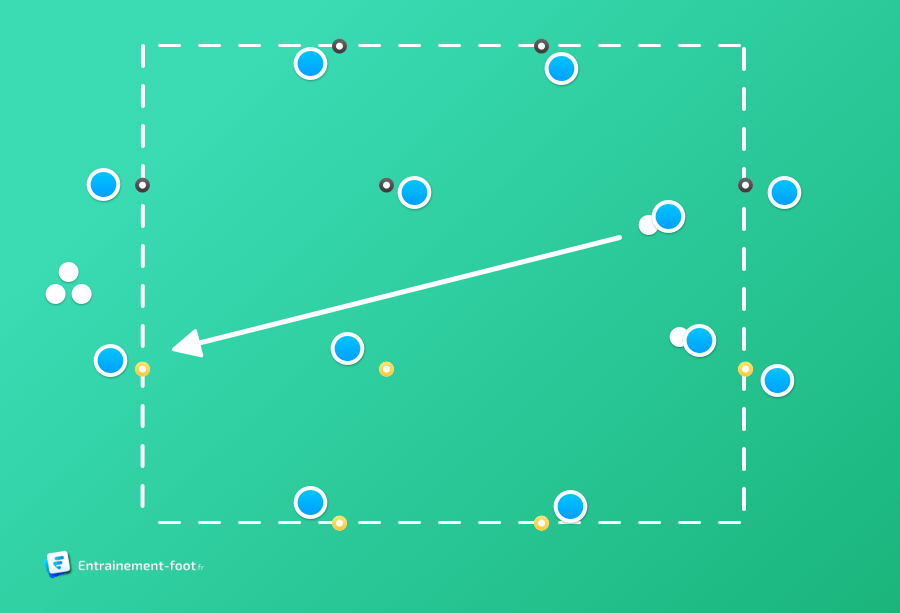
Variation with direct play
Find all the technical information and more details about this warm-up in our dedicated sheet.
Progress with our drills
Access 500+ premium drills with diagrams inspired by pro coaches. New drills every week.
Passing circuit, one-two pass, and direct play
This exercise, notably used by Rafa Benitez at Napoli, is a bit more technical than the previous one as it incorporates more variety. It is ideal for getting into the swing of things with several combinations that mix ball and movement.
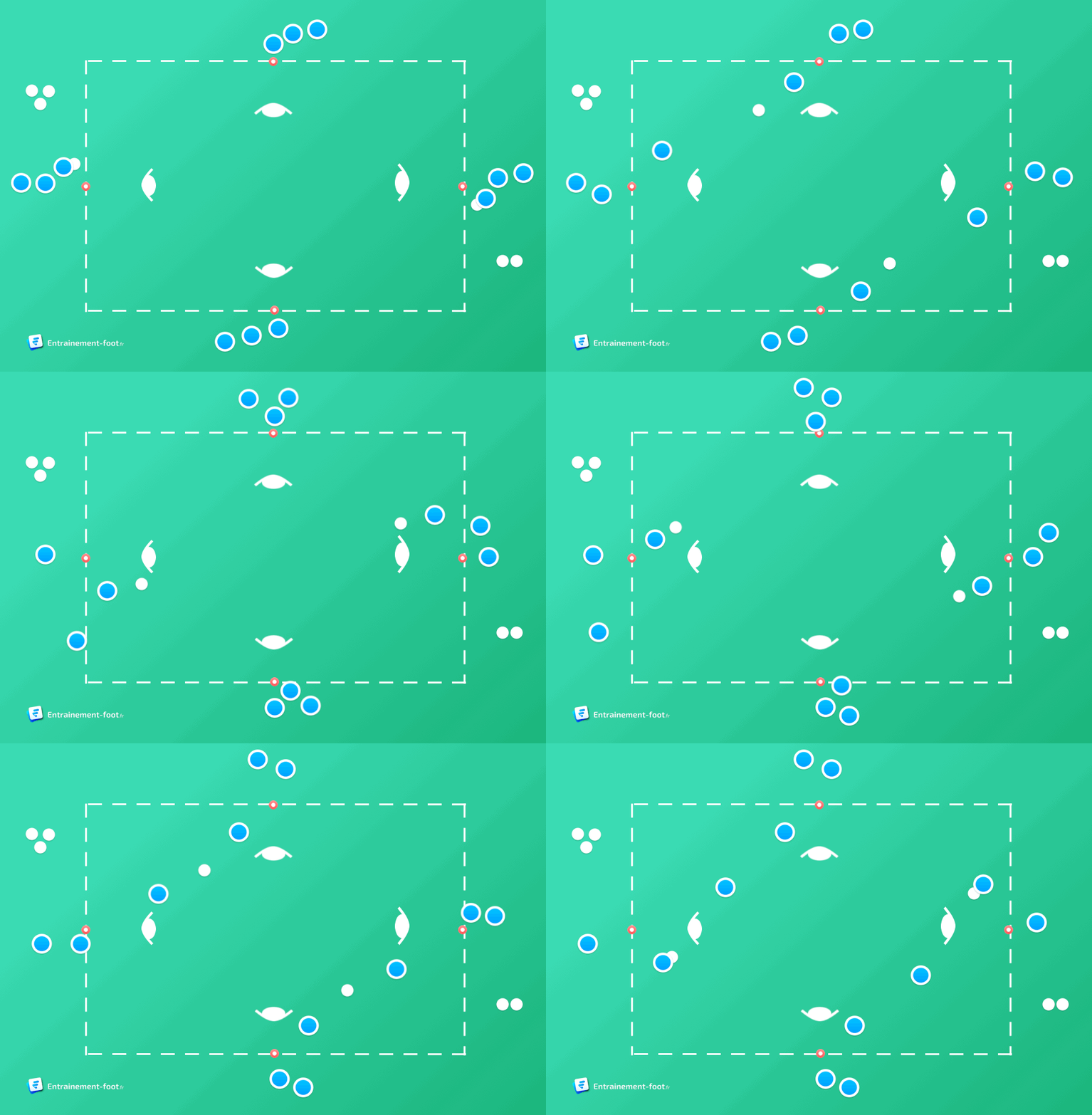
Passing circuit, one-two pass, and direct play
Find all the technical information and details of this warm-up on our dedicated sheet.
5. The warm-up, a crucial step in soccer
In summary, warming up in soccer is much more than a mere formality. It represents a significant part of a coach's training.
It helps limit the risk of injuries, maximize performance, and the application of players throughout the training session.